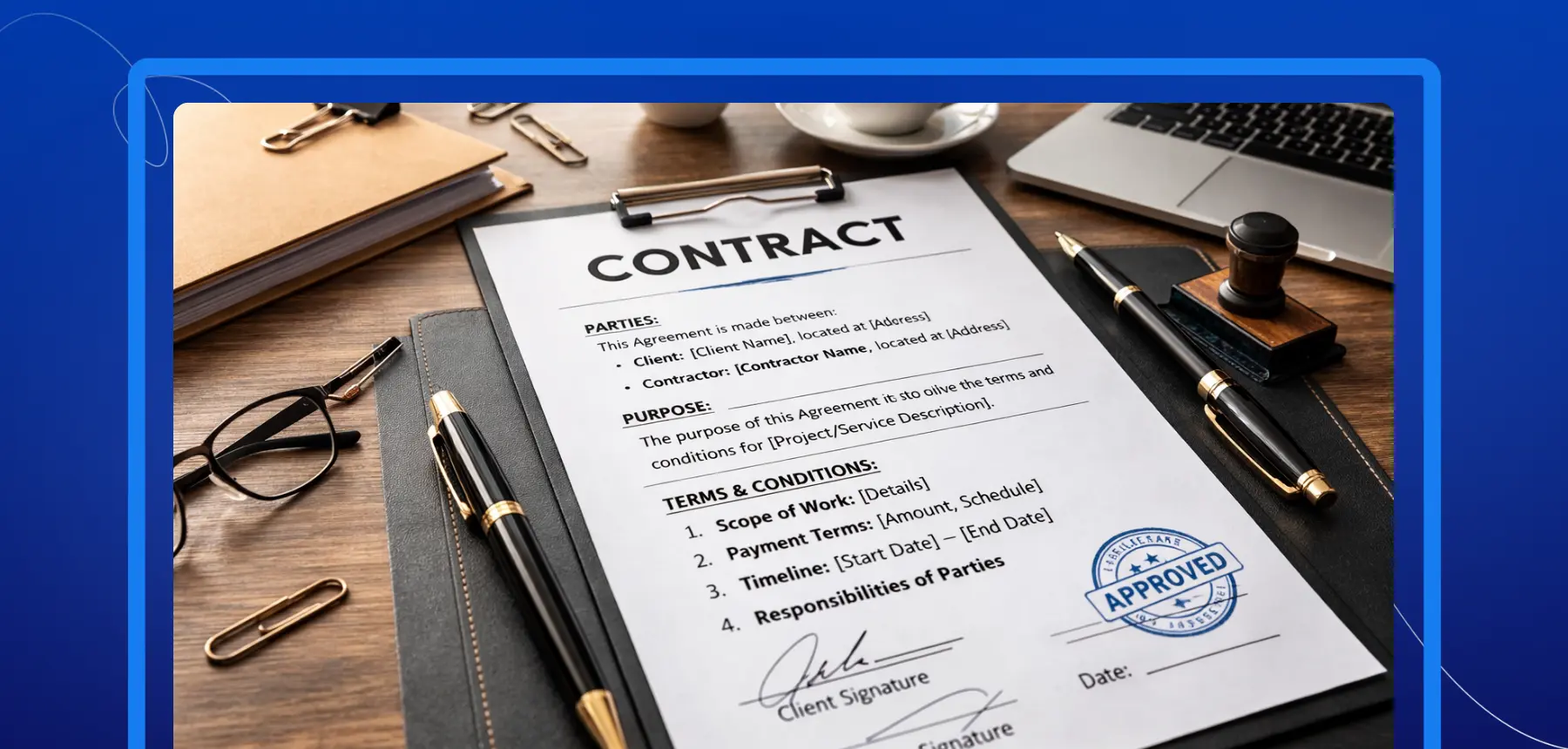

Types of Contracts You Need to Know About

Contracts are part of almost every business decision, even when they operate quietly in the background. Every offer letter, vendor agreement, service proposal, and partnership deal relies on clearly defined terms to move forward with confidence.
Yet many organizations only think about contracts when something goes wrong. Delays, disputes, and compliance issues often trace back to unclear or poorly structured agreements. Understanding different contract types helps businesses reduce risk, maintain accountability, and protect their interests from the start.
In today’s fast-moving digital environment, managing business contracts and legal contracts is no longer just a legal task. It is an operational priority. From HR and finance to procurement and sales, teams need clarity, accuracy, and secure documentation throughout the contract lifecycle. Knowing the right contract type and managing it efficiently can make a measurable difference in how smoothly your organization operates.
What Is a Contract?
A contract is a legally binding agreement between two or more parties that outlines responsibilities, expectations, and obligations. It establishes what each party agrees to do and what happens if those obligations are not fulfilled.
Contracts can be written, digital, or, in some cases, verbal. However, written and digital legal contracts are far more reliable because they provide documented proof of agreement and are easier to enforce.
To be legally valid, most contracts include four essential elements: an offer, acceptance, consideration, and mutual consent. When these components are present, the agreement becomes enforceable and can serve as a foundation for business relationships.

Why Contracts Matter in Business and Law
Contracts bring structure to professional relationships. They clarify expectations, define deliverables, and reduce the risk of misunderstandings. Without well-defined business contracts, even routine transactions can lead to confusion, delays, or legal complications.
They also provide legal protection. If a dispute arises, a properly drafted contract serves as a reference point for resolving issues fairly and efficiently. This is especially important in industries where compliance, confidentiality, and financial obligations are critical.
Beyond legal protection, contracts support operational efficiency. When terms are clear, teams can move forward faster without repeated negotiations or approvals. This clarity builds trust between parties and strengthens long-term partnerships.
Key Elements of a Legally Binding Contract
Every enforceable contract must include specific foundational components. These elements ensure that the agreement is valid under the law and protects all involved parties.
- An offer is the initial proposal of terms made by one party.
- Acceptance confirms agreement to those terms.
- Consideration refers to the value exchanged, such as payment, services, or goods.
- Mutual consent ensures that all parties willingly agree to the contract without pressure or misunderstanding.
When these elements are clearly documented, legal contracts become stronger, more enforceable, and less prone to disputes.
Commo Contract Types Every Organization Should Understand
Different contract types serve different purposes. Choosing the right one depends on the nature of the relationship, the level of risk involved, and the scope of the agreement. Below are the most common contract types used across business and legal settings.
1. Employment Contracts
Employment contracts define the relationship between an employer and an employee. They outline roles, responsibilities, compensation, benefits, and termination conditions.
For HR teams, these business contracts are essential for setting expectations and ensuring compliance with labor regulations. Clear employment agreements also reduce the risk of workplace disputes and misunderstandings.
2. Non-Disclosure Agreements (NDAs)
Non-disclosure agreements protect confidential information from being shared without authorization. They are widely used when employees, contractors, or partners have access to sensitive data, trade secrets, or internal strategies.
NDAs are critical legal contracts for maintaining trust and safeguarding proprietary information.
3. Sales Contracts
Sales contracts govern the purchase and sale of goods or services. They specify product details, pricing, delivery timelines, and payment terms.
These contract types help prevent disputes by ensuring that both parties understand exactly what is being exchanged and under what conditions.
4. Service Contracts
Service contracts outline the terms under which services are delivered. They define scope of work, timelines, deliverables, and compensation.
Organizations that work with consultants, agencies, or vendors rely heavily on these business contracts to ensure accountability and consistent service delivery.
5. Lease Agreements
Lease agreements detail the terms of renting property, equipment, or office space. They include payment schedules, duration, usage conditions, and maintenance responsibilities.
Well-structured lease legal contracts protect both landlords and tenants while reducing ambiguity around obligations.
6. Partnership Agreements
Partnership agreements establish the structure of a business relationship between partners. They define ownership percentages, responsibilities, capital contributions, and profit-sharing arrangements.
Without a formal partnership contract, disagreements over roles and financial distribution can quickly arise.
7. Licensing Agreements
Licensing agreements grant permission to use intellectual property such as software, trademarks, or proprietary technology. They specify how the asset can be used, for how long, and under what limitations.
These contract types are especially important in technology, media, and product-based industries.
8. Loan Agreements
Loan agreements outline borrowing terms, including repayment schedules, interest rates, and penalties for default. These legal contracts ensure financial clarity and protect both lenders and borrowers.
They are essential for maintaining transparency in financial transactions and long-term funding arrangements.
9. Vendor and Supplier Agreements
Vendor and supplier agreements formalize relationships between businesses and their suppliers. They define product specifications, delivery timelines, pricing, and service expectations.
Strong business contracts in procurement help maintain reliable supply chains and consistent operational performance.
10. Settlement Agreements
Settlement agreements are used to resolve disputes outside of court. They define resolution terms, compensation (if applicable), and release of claims between parties.
These legal contracts help organizations avoid lengthy legal proceedings while achieving faster and more controlled outcomes.
Essential Clauses to Review in Any Contract
Regardless of the contract type, certain clauses play a critical role in protecting all parties involved. These clauses reduce uncertainty and provide a framework for managing unexpected situations.
Important clauses often include confidentiality provisions, termination terms, liability limitations, and dispute resolution mechanisms. Reviewing these sections carefully ensures that obligations, risks, and protections are clearly defined before signing.
Common Mistakes Organizations Make With Contracts
Many organizations underestimate the importance of proper contract management. One common mistake is using vague language that leaves room for interpretation. Another is failing to update agreements when business terms change.
Poor document tracking is also a major issue. Lost versions, unsigned agreements, and outdated templates can create compliance risks and operational delays. These challenges are not just legal problems. They directly affect efficiency, accountability, and audit readiness.
Digital Contracts and Modern Contract Management
As organizations shift toward digital workflows, contract management is evolving rapidly. Digital contracts allow businesses to prepare, send, sign, and store agreements securely without relying on manual paperwork.
This transition improves speed, accuracy, and visibility across the contract lifecycle. Instead of printing, scanning, and emailing documents back and forth, teams can manage agreements in a centralized and secure environment.
Platforms like Blueink support this process by enabling organizations to streamline contract workflows with secure electronic signatures, detailed audit trails, and organized document storage. This is particularly valuable for HR teams handling employment contracts, finance teams managing agreements, and operations teams overseeing vendor documentation.
By digitizing business contracts and legal contracts, organizations reduce administrative friction while maintaining compliance with eSignature laws such as ESIGN and UETA in the United States.
Choosing the Right Contract Approach for Your Organization
Selecting the right contract type is only part of the equation. Organizations must also consider how contracts are created, reviewed, signed, and stored. A clear process ensures consistency and reduces legal and operational risks.
Factors to consider include the complexity of agreements, regulatory requirements, and the volume of contracts handled regularly. Organizations managing high contract volumes benefit significantly from structured digital workflows that improve tracking and accountability.
Why Understanding Contract Types Is a Strategic Advantage
Understanding contract types is not just about legal awareness. It is about operational control, risk reduction, and business efficiency. When organizations use the right contracts and manage them effectively, they minimize disputes, improve transparency, and strengthen professional relationships.
In a digital-first environment, combining strong contract knowledge with secure electronic signature workflows allows businesses to move faster while maintaining accuracy and compliance.
Ready to simplify how your organization prepares, signs, and manages contracts? Schedule a demo to see how secure e-signature workflows and centralized document management can support your contract processes at scale.
Disclaimer
Blueink is not a law firm and does not provide legal advice. This page is for informational purposes only and should not be considered a substitute for professional legal counsel. If you have questions about the validity or enforceability of eSignatures or digital signatures, we recommend consulting with a licensed attorney. Use of Blueink’s services is subject to our Terms of Use and Privacy Policy.

Recent post
October 16, 2026
October 12, 2026
October 6, 2026
October 1, 2026


